
Technology Report
October 20, 2026
Army Blood Link
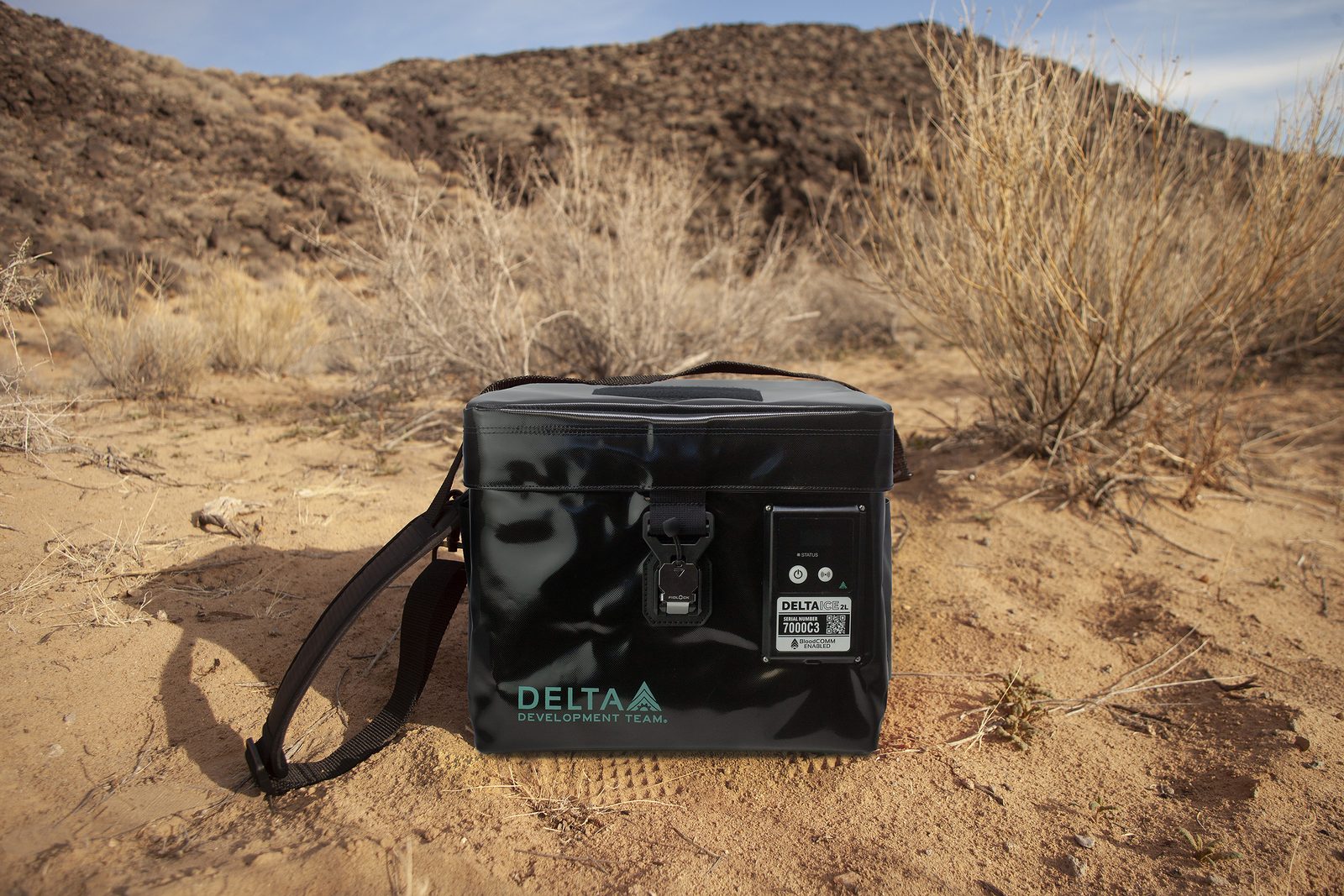
Blood is among the most perishable things an army ships. It has to stay inside a narrow temperature band from the blood bank to the patient, and it is often needed most where trucks cannot safely go. On October 20, 2026, two Arizona companies, Delta Development Team (DDT) of Tucson and The Good Drone Company (GDC) of Tempe, announced a US Army contract to build a drone system for that job under a program called Army Blood Link.
What is new is the pairing of a cargo drone with a monitored blood cooler built to one Army specification. Drone delivery of blood is already established in civilian health systems, but this contract asks for a US-built system that can do it where ground transport is “unavailable, delayed, or unsafe,” in the companies’ words. It is a first award, not a repeat. The Army posted the solicitation in mid-September 2026 through its contracting office at Fort Bragg, North Carolina, on behalf of the XVIII Airborne Corps’ Joint Operations Innovation Outpost, and proposals were due September 21, according to the federal notice. The companies did not disclose the contract’s value.
GDC will supply two US-built prototypes of its hybrid VTOL cargo drone. VTOL stands for vertical takeoff and landing: the aircraft lifts off like a helicopter, with no runway, then flies forward on a wing like an airplane, which uses far less energy than hovering. Hybrid, in GDC’s description, refers to that combined design. The company says each prototype is designed to carry up to six units of blood. On its commercial version, GDC claims a payload of up to 55 pounds (25 kilograms), a range of more than 300 miles, and speeds up to 93 mph. The company is fielding that aircraft for freight in Kenya.
DDT supplies the part that keeps the blood usable. It will deliver six Delta ICE 2L Smart Blood Coolers, each holding two units of blood or blood products. The company says each cooler keeps its contents within the required range for three hours of flight in humid conditions, with outside temperatures from 15°F to 120°F. The coolers log temperature as they go and report it over Bluetooth and cellular links, so the medics who receive the blood can see whether it stayed in range the whole trip. That record matters, because blood that warms too much has to be thrown away.
The flying is meant to be simple. The companies say the system will be run by one person with minimal training, fly semi-autonomously along waypoints, and keep communications at ranges up to 30 miles. Waypoint navigation means the operator sets a route as a chain of GPS points and the aircraft flies it on its own, with a human watching and able to step in. The prototypes are meant to drop blood within 10 meters of a designated target, day or night.
Those are design goals, and nothing has flown under the contract yet. The Army’s notice called for a three-month prototype period with first deliveries expected at Fort Bragg, and it asked for systems carrying 20 units per mission. The companies’ six-unit figure per drone is lower, and they have not explained how the two numbers relate. Building on a commercial aircraft rather than a new design is the point, GDC chief executive Jake Vander Ploeg said: “The military is adopting commercial technology like our cargo drones to quickly test new ideas in the field without starting a full aircraft development program.”
“Getting blood to the point of need is only part of the challenge. It must also remain within the required temperature range throughout the journey,” said Montgomery Leija, DDT’s chief executive. Army Blood Link is part of the Armed Services Blood Program, which supplies blood products to US forces worldwide.