
Technology Report
September 29, 2026
SPROUT Vine Robot
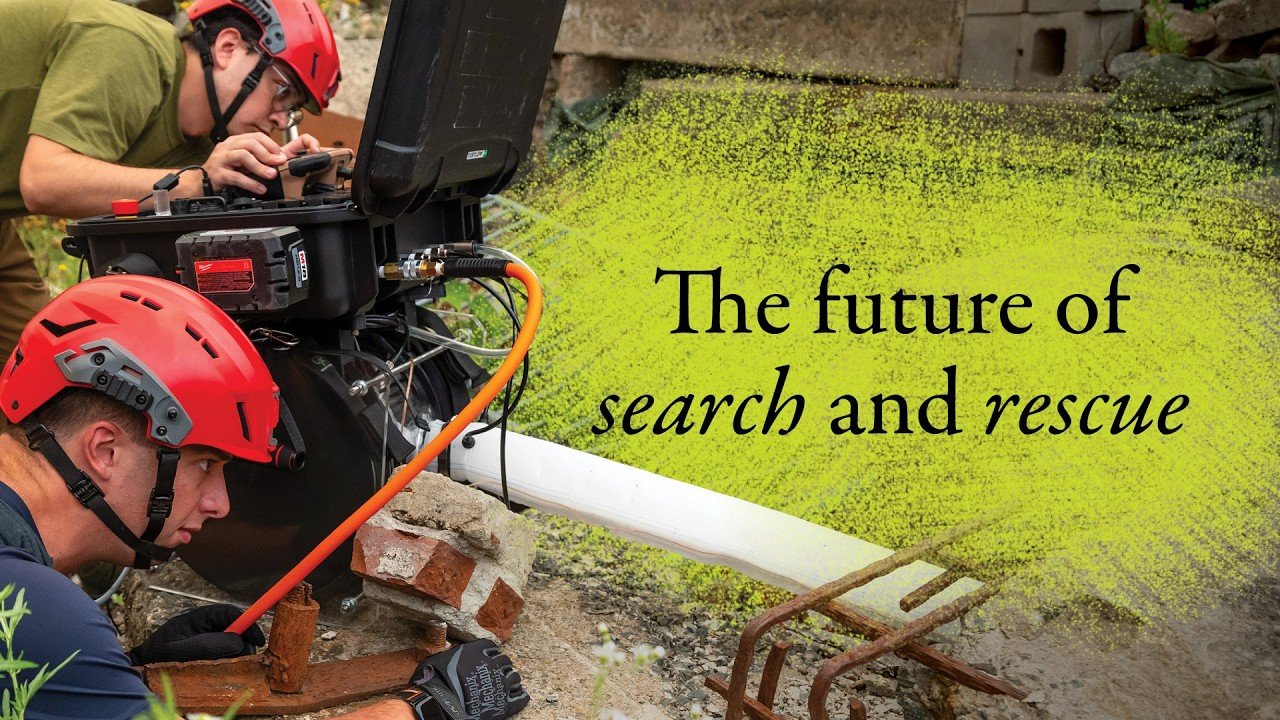
When a building collapses, the people inside are often reachable only through narrow, twisting gaps in the debris. Cameras on telescoping poles cannot bend around corners. On September 29, 2026, the University of Notre Dame described a robot that can: SPROUT, short for Soft Pathfinding Robotic Observation Unit, a flexible, inflatable “vine robot” that grows into a void instead of crawling through it.
A vine robot is a soft tube that lengthens from its tip as air pushes material outward, much as a plant shoot grows. Because the body does not slide against the rubble, it can snake past obstacles that would snag a wheeled or tracked robot. According to Notre Dame, SPROUT can twist around obstacles and extend up to 30 feet into narrow void spaces with a camera at its tip. The university says acoustic sensors distributed along the body could also help map a route through the debris, which would tell rescuers not just where a survivor might be but how to reach them. SPROUT is a different robot, from a different team, than the KAIST vine robot also covered in this report.
The work is led by Margaret McGuinness, an assistant professor of aerospace and mechanical engineering at Notre Dame, and was developed with researchers at MIT Lincoln Laboratory. “Every second counts when you’re trying to rescue someone who might be trapped after a building collapses,” McGuinness said. The university says the robot is meant to improve situational awareness, not to replace the people doing the rescuing.
Notre Dame frames SPROUT against the tools urban search-and-rescue teams already use: trained dogs that detect human presence under rubble, acoustic listening devices that help estimate depth, and pole-mounted search cameras. The Federal Emergency Management Agency maintains 28 urban search-and-rescue task forces for collapses, hurricanes, tornadoes and other disasters, the release notes.
Responders are part of the development. According to the university, the team has tested SPROUT with urban search-and-rescue professionals at a mock collapsed building in Massachusetts and is now working with Clay Fire’s regional search-and-rescue team in South Bend, Indiana, whose feedback is shaping how the robot is adapted to field conditions. Notre Dame says similar technology could eventually help assess damaged structures in conflict zones. The release does not give a deployment date, cost, or performance figures beyond the 30-foot reach, and the acoustic route-mapping is described as a capability that could help rather than one already demonstrated.