
Technology Report
September 29, 2026
VAPRE-M2 and the 9-1-1 Robot Platform
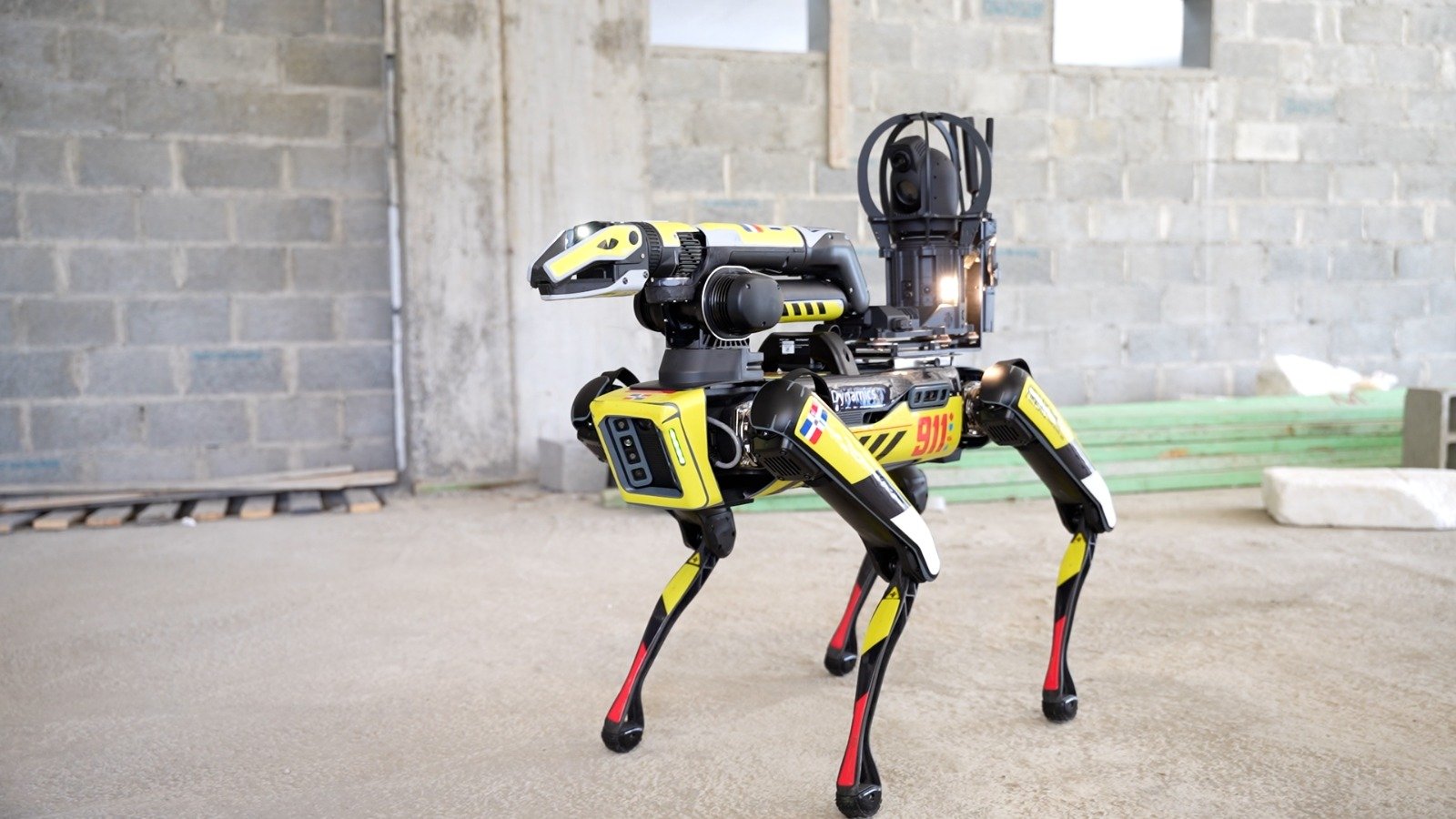
Most emergency drone programs are run by individual police or fire agencies. In the Dominican Republic, the national emergency call system itself is adding them. On September 29, 2026, the newspaper El Periódico reported (in Spanish) that the country’s National Emergency Care and Security System, known as 9-1-1, had presented robots, first-response drones and artificial intelligence tools at LA Agenda Semanal, a weekly public briefing led by President Luis Abinader.
The headline item is the VAPRE-M2, which 9-1-1 described as a first-response drone able to reach a scene while emergency units are still on the way and to transmit information in real time. According to the report, the drone is tied into the system’s existing tools: geolocation of the incoming call, a routing feature called Ruta Rápida (Fast Route), and the dispatch of response agencies, so that crews have a picture of the situation before they arrive. The presentation walked through the whole chain, from a 9-1-1 call to the deployment of response units.
The system also showed a robotic platform developed together with Boston Dynamics, the US maker of the four-legged Spot robot, intended to support response agencies in scenes considered high-risk and to reduce the exposure of personnel. 9-1-1 also described urban video surveillance and artificial intelligence tools running on NVIDIA computing infrastructure to support decision-making.
According to what was presented, the Dominican Republic becomes the fourth country in the Americas, after the United States, Canada and Brazil, and the first in the Caribbean, to bring this technology into emergency operations. That claim is the agency’s; the report does not say exactly which technology the ranking refers to. 9-1-1 says its goal is a single ecosystem that links citizens, response agencies and technology to receive, locate, visualize, analyze and coordinate each emergency.
The report gives no technical specifications for the VAPRE-M2, such as its maker, flight time or range, and does not say how many drones or robots are in service, where they are based, or how many calls they have handled.